On Purpose and Timing: a Journey of Continuous Learning

Back in 2020, during the COVID pandemic, I convinced myself to continue my studies after working for several years in the construction industry. In fact, I probably should have written this post years ago. I remember a few people once approached me and asked me to write about scholarship hunting and the application process, sorry that I’m only writing it now.

Here, I won’t go into the technical details of the process. It has been years, and I know regulation and process have changed. Instead, I want to share a more general reflection on studying and scholarships. Take this as a tiny way of giving back to society, from my perspective as a scholarship awardee.

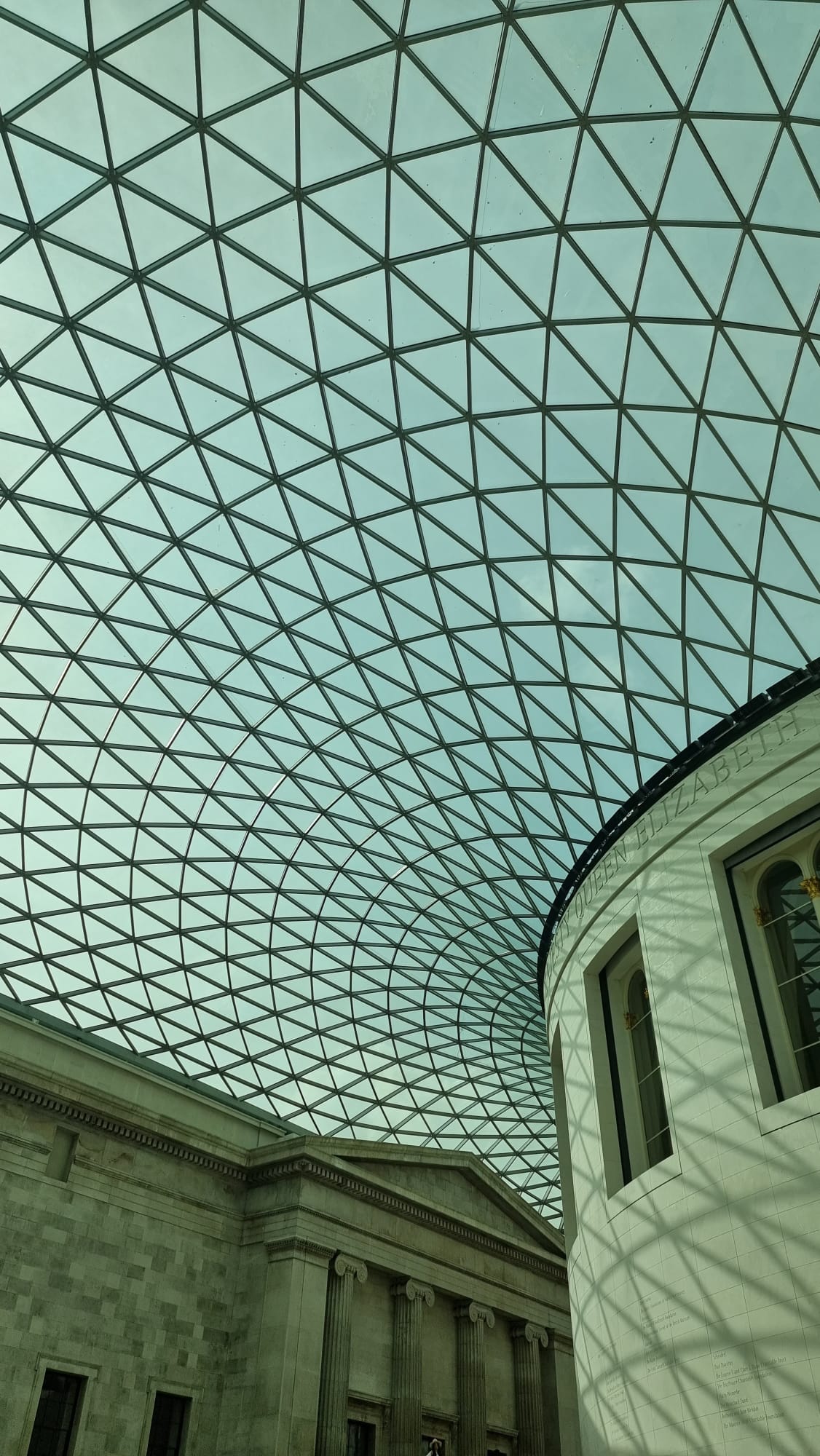
Tesselating Glass Roof at British Museum

Find your why
This simple sentence reminds us of Simon Sinek’s book (well, I highly recommend this one) but more importantly, it captures the key idea. It also applies not only to continuing your studies, but to life decisions in general.

Looking back, I actually wanted to pursue a master’s degree right after finishing my bachelor’s in Bandung. However, during my final year, my dad reminded me that gaining industry experience first might be more valuable. I vividly remember we had a heated discussion during lunch whether working first or immediately continuing my study.

At the end I know that, there is no right or wrong answer to whether you should work first or immediately pursue a master’s degree after graduating. It really depends on what you want to do in the future. In my case, I wanted to work in the industry, so I needed a clear reason why I should pursue a master’s degree. Like what knowledge are really needed or what exactly what I wanna do in this industry. While working, I kept searching for my why until I finally found it.

We All Got Our Own Timing
How long does it take to find your why? It depends. Once you find it, just do it. For me, it took five years. Some of my friends found theirs sooner, others took longer. Stop comparing yourself to others. We all have our own timelines. Just trust your instincts, and keep going. I believe we will know when it’s our time.

Know your Vision and Goals
Pursuing further study is not the final destination, it’s a step toward something else. Besides understanding your why, you also need to know what you want to do after you finish. This doesn’t mean you need to secure a job in advance. But at the very least, you should have an idea of how you want to use the knowledge and perspective you gain from your studies.

Do Your Research and Lock In.
There are countless options out there: countries, universities, majors, and scholarships. Do your research. Each university has its own admission requirements, and each scholarship got its own selection process. Find what aligns with your why and your long-term goals, then commit to it. The preparation will naturally follow the choices you make, so before committing, make sure you truly understand them first

Be Persistent
Once you decide to continue your study (in my case pursuing a master’s degree) especially with a scholarship, you need to fully commit. There is no instant method. I had to prepare deliberately and patiently. Coming from a non-English-speaking country, I needed to prepare for English proficiency tests like IELTS or TOEFL as well. That meant studying after work, sacrificing some Netflix nights. Everything takes time. Trust the process.

In my humble opinion, once you really understand these steps, you will go through the journey with much more confidence. For me, pursuing a scholarship became a journey of self-discovery. I wasn’t in a rush. I spent five years working in the industry, gaining experience and understanding myself better.

During those years, my path shifted several times: from geotechnical engineering, to quantity surveying, then to Building Information Modeling. It was there that I found my passion and eventually decided to pursue a master’s degree in digital engineering management. Even after finishing my studies, my career direction continued to evolve. I’ve learned to see every shift as a learning opportunity.

To those who want to pursue studies abroad: what I gained was not only knowledge, but also perspective, a broader one. for me, wherever we are, we should keep learning.

So keep seeking knowledge, wherever life takes you.
Cheers

Brisbane Coffee Trip

I should have finished writing about this Brisbane coffee trip back in 2024. But life, as usual, got me busy and distracted. I visited Brisbane in early autumn 2024 for a short course at Griffith University. At first, I didn’t expect that Brisbane’s coffee culture is quietly thriving.

I stayed in central Brisbane, and whenever I’m in travel mode, I become surprisingly disciplined. Early mornings, a morning walk, and coffee before class, on repeat, everyday. Brisbane turned out to be a perfect city for this routine. Most coffee shop open very early in the morning, which I absolutely loved.

There’s something special about a city that understands people need coffee before anything else starts. I found myself wishing Jakarta would adopt this rhythm too.

However, one small cultural difference: many coffee shops in Brisbane close on weekends. Coming from Jakarta, where coffee shops are busiest on Saturdays and Sundays, this felt almost strange to me. Well, here are the coffee shops in Brisbane that gave me a solid reason to wake up early, fueling my morning walks and slow morning before class

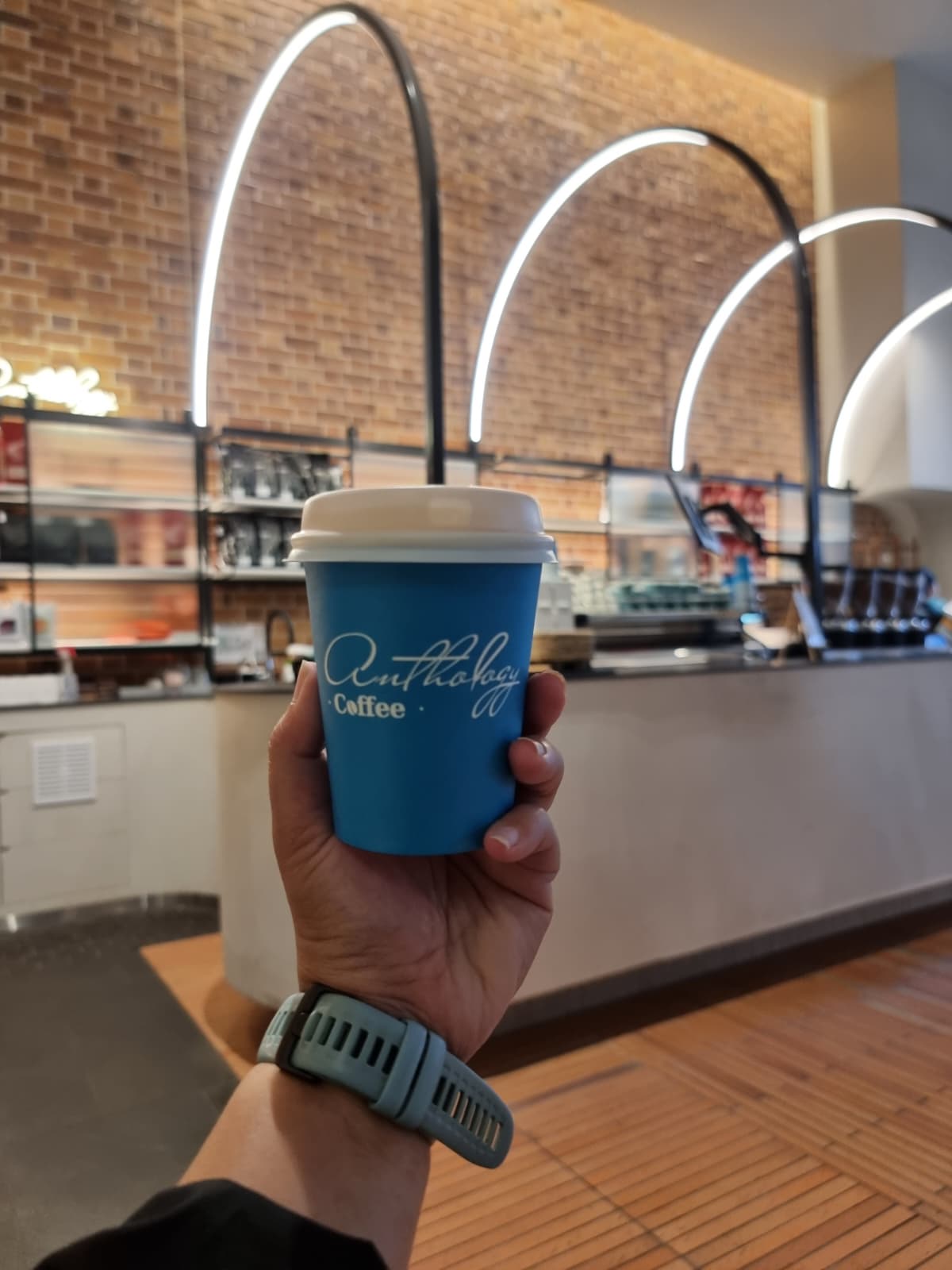
Coffee Anthology
This was the very first coffee shop I visited after arriving in the city. A solid introduction to Brisbane’s coffee culture. Great coffee, cozy, and welcoming. The plus point is they open everyday.

Coffee Anthology at 155 Charlotte St

The Maillard Project
Located just across from where I stayed at Charlotte St. Got great selection of beans, convenient, and great coffee. Flat white is smooth and well balanced, but sadly it’s closed on the weekends.

The Maillard Project at 119 Charlotte St

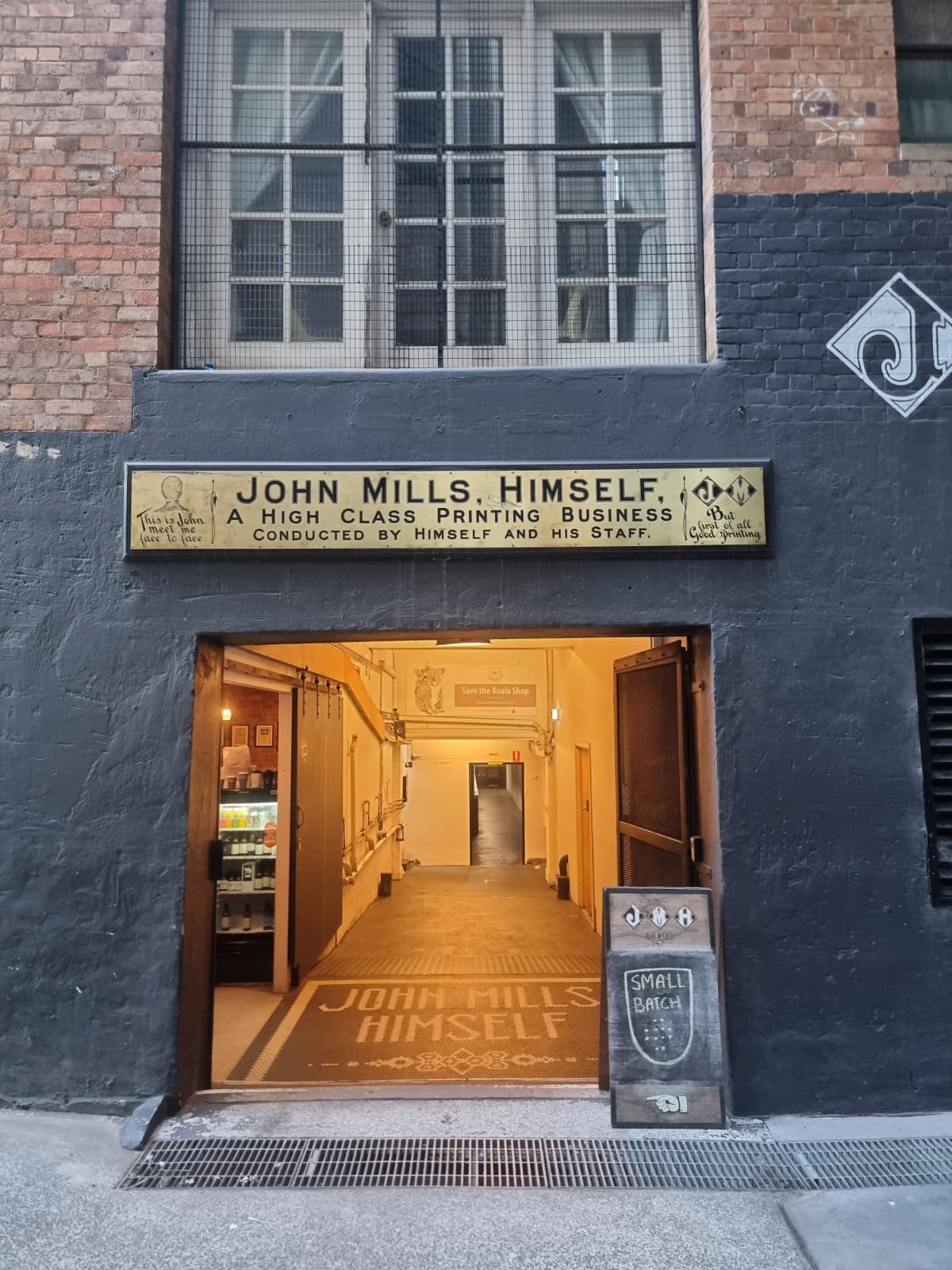
John Mills Himself
Small, efficient, and to the point, this ended up being my favourite. I would recommend this coffee shop for anyone who is visiting Brisbane. Later, when I went to Patricia Coffee Brewers during my Melbourne Coffee Trip, it instantly reminded me of John Mills Himself: compact, focused, just good coffee done awesomely right.

John Mills Himself at 40 Charlotte St

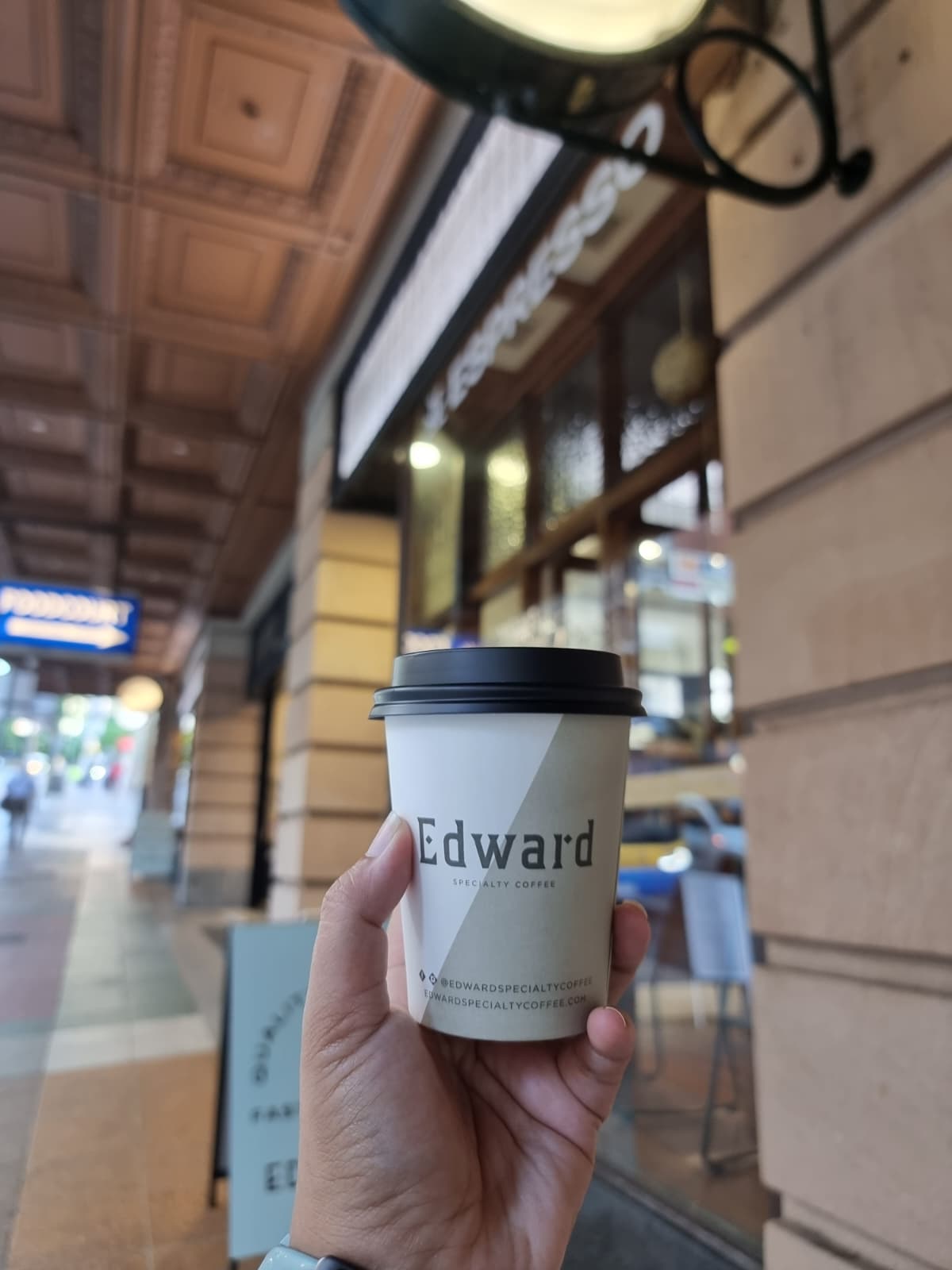
Edward Espresso
What I remember most is the uphill walk to get there from the central. A great morning workout, rewarded with a satisfying cup of coffee at the top. Open early in the morning, crowded with people waiting for their coffee.

Edward Espresso at  25/275 Edward St

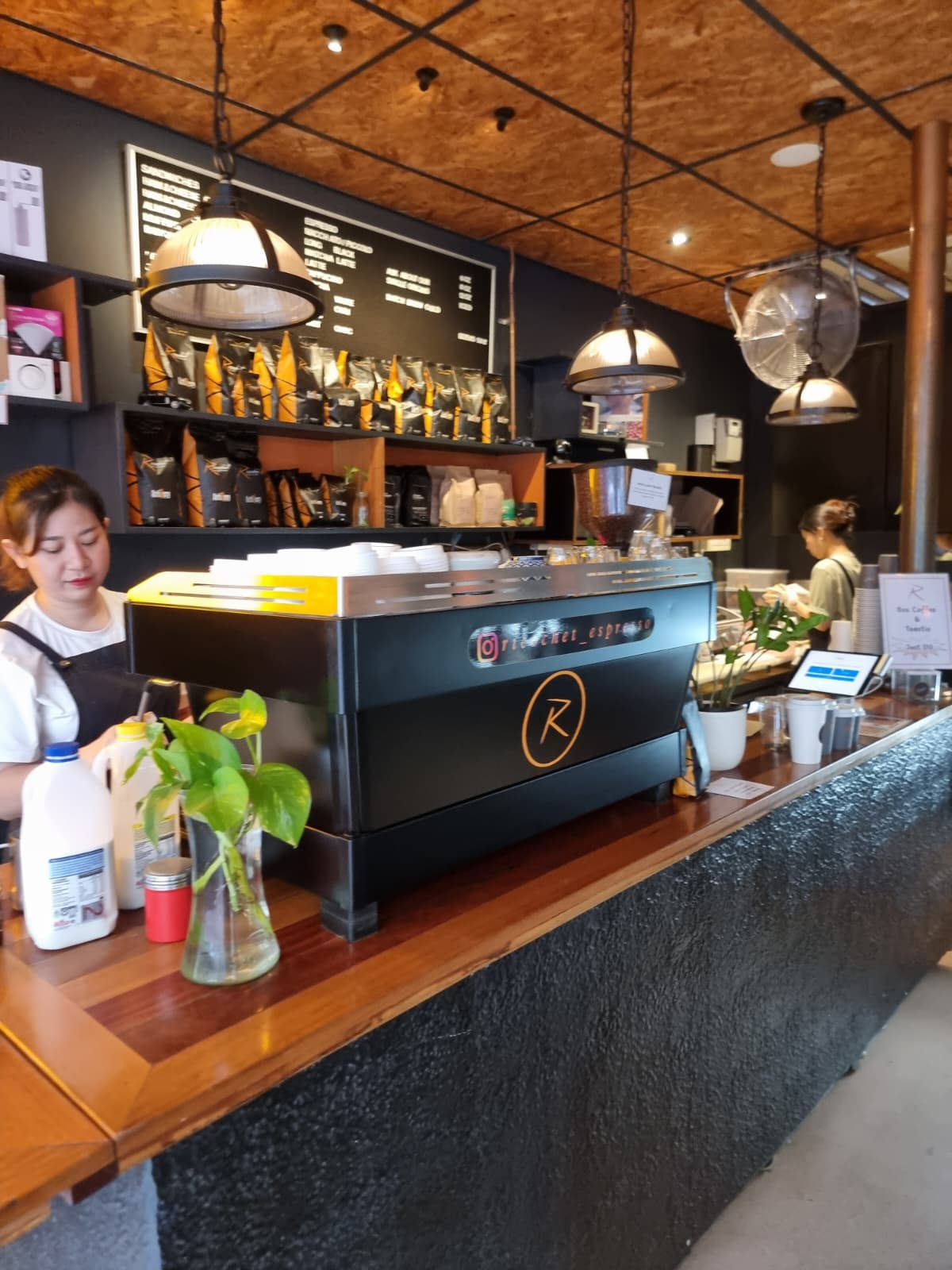
Ricochet Espresso
Not far from Edward Espresso. Strong coffee and straightforward. I remember I need to rush back to the apartment because I only got few minutes before my class started.

Ricochet Espresso at 276 Edward St

Well, I only spent a few days in Brisbane, but they were good days. Good coffee, beautiful bridges, and a great city. It’s a well-paced city for morning walks, with (again) good coffee as a reward before class. After finishing my studies in London, I hadn’t experienced this kind of rhythm again. Brisbane quietly brought back that feeling, the balance between moving forward and just enjoy the present.

Brisbane may not shout its coffee culture like Melbourne does, but I think it doesn’t need to.  It just thrives quietly for its people.

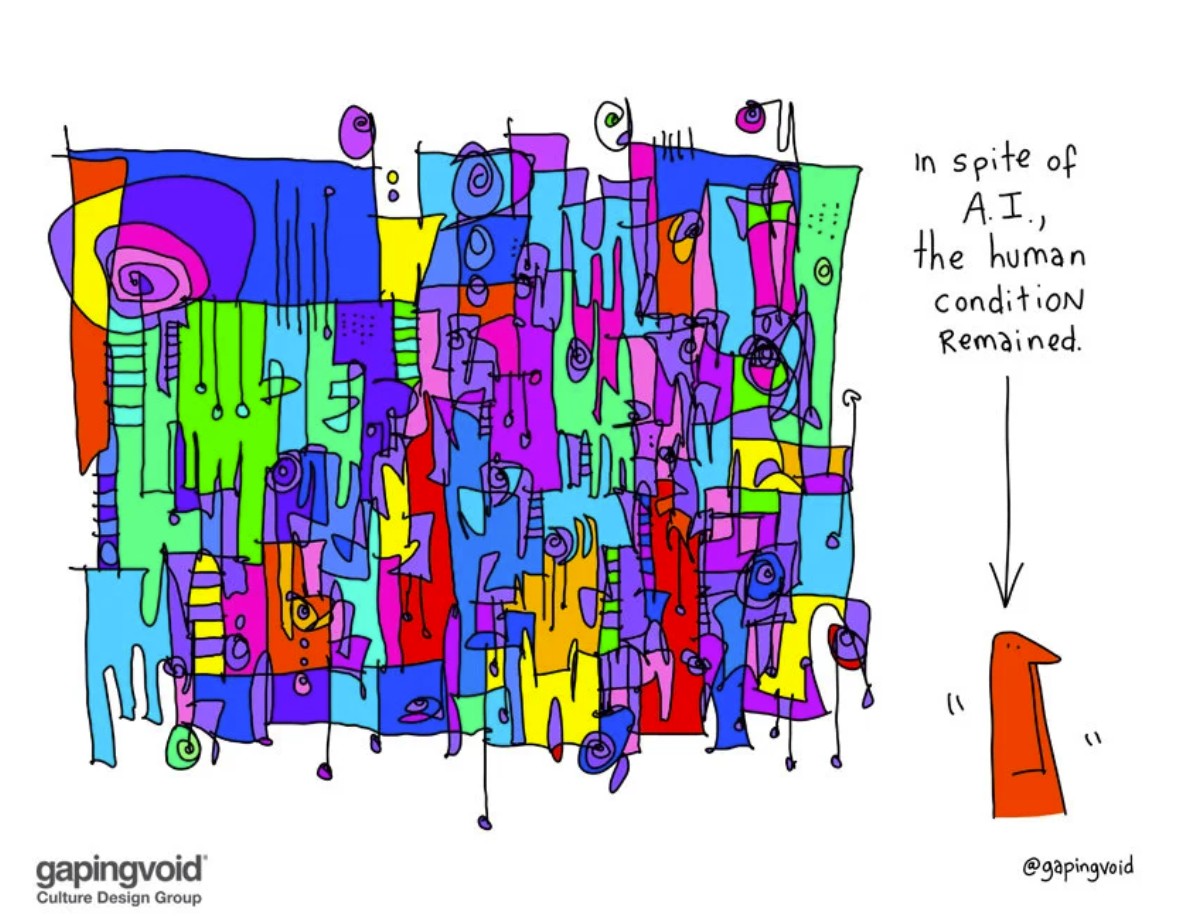
What AI Can’t Replace in Engineering

Artificial intelligence (AI) is rapidly transforming the world today, including the construction industry. With AI, we can now analyse data and run complex simulations almost instantly. In construction for example, AI supports and optimises the use of BIM and other digital tools for scheduling, cost estimation, and even hazard identification.

Yet amid all this technological acceleration, a common question emerges:

will humans compete with AI in the future?

However, from my perspective as an engineer, the question that we should be asking is:

In the future, what truly differentiates engineers from AI?

I believe one of the key differentiators is engineering judgement. Today, there are many capabilities that AI performs better than humans, such as faster calculations and large-scale data processing. However, AI cannot take responsibility for decisions. AI cannot judge and decide.

Engineering judgement is the ability to interpret data, understand context, evaluate trade-offs, and make decisions. While in construction context, the judgement need to consider safety, ethics, and long-term consequences as well. At the end, it is humans, not machines (or AI), who are held accountable.

AI can analyse and optimise.
But only humans can judge.

If engineering judgement that differentiates engineers from AI so the next important question that should be raised is:

“how do we develop this judgement?”

From my experience, there are two elements that play a crucial role: formal engineering education, and first-hand project experience

Formal education which through schools or universities provides engineers with foundational theories, frameworks, and problem-solving approaches. This knowledge shapes how engineers think. However, classroom knowledge alone is not enough to develop engineering judgement.

Judgement develops when theory is tested against reality. In construction projects, we usually face tight deadlines, budget constraints, site limitations, and often incomplete information. These exposure to project challenges can gradually strengthen engineering judgement. My interactions with senior engineers and experts clearly demonstrate how deeply their judgement has been shaped by years of experience in the project.

Actually, the importance of understanding fundamental engineering principles became especially clear to me a few years ago while I’m still work a lot with BIM. During a BIM session I delivered at a university, one student asked a question I still remember clearly:

“Is it still important to learn basic structural analysis when we already have BIM?”

My answer was immediate:

“Yes! absolutely.”

In many cases, BIM is merely a tool. Without a solid understanding of engineering fundamentals, it becomes a classic case of garbage in, garbage out. Models and analysis may look impressive but without proper judgement, the outputs can be misleading. Today, In the midst of increasing AI adoption, that question still stay with me, and sometimes I asked myself:

“What should future civil engineering students learn in class? Will they still study fundamental like structural analysis or geotechnical engineering the way we did?”

My answer remains exactly the same as the one I gave years ago:

“Yes, absolutely.”

Because learning engineering fundamentals: understanding frameworks, engineering mechanics, and problem-solving approaches remains essential. AI does not replace engineering thinking. It supports and enhances our ability to analyse and optimise, but it does not decide for us.

Again, engineering judgement stands on two pillars: strong fundamental engineering knowledge and project experience. As AI becomes more embedded in engineering workflows, the real risk is not that engineers will become obsolete, but that they may become over-reliant on AI without sufficient understanding or judgement.

The future does not belong to engineers who merely operate AI. It belongs to engineers who:

  1. Master fundamentals
  2. Understand the project
  3. Exercise engineering judgement through experience

In the end, engineering is not just about computation, calculation, or analysis.
It is about responsibility.

2025 Reflection: A Year of Redefining

At the end of 2024, a rather busy year filled with 8-to-5 (or 8-to-8 again) workdays, short courses, business trips, and conferences, I remember joking with my colleagues that I wouldn’t take on too many side activities in 2025. After all the fun and chaos of 2024, I promised myself that 2025 would be a chill and slow year.

But then 2025 came with an unexpected twist, one that completely redefined my so-called “chill year.” What was meant to be slow quickly turned into another roller coaster ride. Thrilling. But also fun. I took the challenge and chose to enjoy the ride anyway. The rest of 2025 became a path I had never crossed my mind before.

I had to adapt to unfamiliar ground, build new connections, and learn new skills. Rather than leaving my comfort zone, I chose to expand it. It wasn’t always comfortable, but as long as there was something to learn, I embraced it.

Through all the changes, some things remained constant: coffee, reading, and painting. When everything else shifted, these small constants kept me steady, grounding me and quietly reminding me that we are more than our roles.

What I Learned in 2025

1. It’s okay to let go of a plan and enjoy the ride anyway.
My “slow year” turned into a roller coaster almost instantly and I decided to ride it anyway. Chasing the thrill, and yes, the occasional adrenaline rush. I learned that plans are useful, but they shouldn’t be rigid. A bit of flexibility allowed me to stay open, present, and even enjoy paths I never planned to take.

2. We always need to embrace a beginner’s mindset.
Becoming a beginner once again reminded me that there is still so much to learn and that growth often begins with humility. I now try to see myself as a work in progress: a continuous learner, a student of life.

3. Hobbies are anchors when everything shifts.
When routines and expectations changed, coffee, painting, and reading remained constant. They grounded me, gave me space to think, and helped me to keep going.

4. Don’t joke too much with colleagues… the universe might be listening. (kidding)
What I really learned is to be more mindful of the words I throw, even casually. Sometimes jokes have a funny way of turning into reality or at least into unexpected twists.

White Lilies (2025), Acrylic on Paper

2025 didn’t unfold the way I planned, but perhaps that was the lesson. Not every year is meant to be predictable and that’s where the fun is.

Some years teach us how to move fast.
Some years teach us how to slow down (or, ironically, move even faster).

For all the rides, thrills, and adrenaline rushes 2025 offered me, I’m deeply grateful. What felt like unfamiliar ground at first slowly became a space for growth. For me, 2025 will always be a year of redefining.

Hola from a beginner, once more.
Let’s ride into 2026 and embrace the unexpected.

Rethinking BIM Adoption: Why BIM is Not One-Size-Fits-All

For the past decade, I have worked across various roles in an Indonesian contractor. From site and project management to BIM management and digital leadership. During this journey, I have seen BIM praised as a silver bullet and mandated as a requirement. However, one thing that I learned is:

BIM is not a one-size-fits-all. Its value depends on how well it is tailored to each project objectives and requirements.

Without this tailoring, BIM implementation can become layer of complexity which adding processes without necessarily improving outcomes. Only when it is aligned with clear purposes, BIM becomes a strategic enabler not just a deliverable.

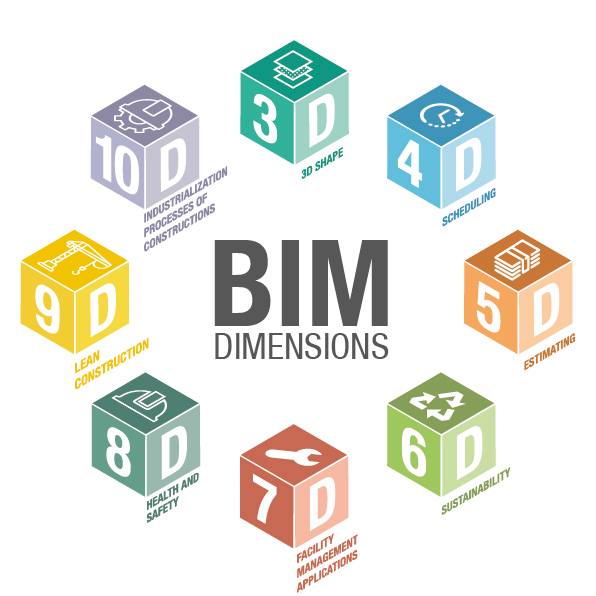
BIM Dimension (parametric-architecture.com)

In theory, full BIM implementation at the highest maturity level on every project sounds ideal. in practice, especially within the Indonesian construction industry, it is neither optimal nor realistic. Because projects vary significantly in scale, complexity, delivery method, client maturity, digital capability and expectation. Applying the same BIM scope to a small building project and a large, complex data center, for example, rarely makes sense. The effort and cost may outweigh the benefits.

Over the years, my own question has shifted from “Can we use BIM?” to “How we can reap the maximum Benefits of BIM?”. BIM delivers its greatest impact when it is treated as an enabler, not merely a contractual deliverable. In successful projects, BIM is aligned with clear, practical objectives, such as:

  • Supporting method statements and construction sequencing
  • Improving coordination between structure, architecture, and MEP
  • Reducing rework through clash detection
  • Improving safety planning and hazard identification

A more effective approach is to right-size BIM implementation, so we need to understand its purposes. For example at tender stage, BIM may focus on construction sequencing, and quantity take offs to support pricing and budgeting. For low complexity project progress monitoring and quantity support may be sufficient. While for high risk project (line data center with complex MEP) needs deeper BIM integration for advance coordination and staging. The key is to be selective, ensuring that the effort invested is proportional to the value created.

Contractors operate under tight margins. Hence, every additional scope of BIM must therefore be justified. A mature BIM strategy should considers

  • Cost of modeling and coordination
  • BIM competency within the project team
  • Time required to develop and update the models
  • Expected reduction in rework, or claims

When BIM is tailored correctly, the benefit-cost ratio becomes positive. On the other hand, when BIM is over engineered, the ratio might flip.

In Indonesia, currently BIM adoption is growing, but maturity levels still vary widely across clients, consultants, and contractors. However the competency gap has narrowed over the past few years. A successful BIM implementation requires understanding of the project and clear purposes of its BIM adoption. The goal is not to do everything digitally but to build smarter digitally and physically. After 10 years working within an Indonesian contractor, my conviction about BIM is simple:

BIM should adapt to the project, not force the project to adapt BIM

When BIM is tailored and aligned with project objectives, delivery strategy, and cost realities, it becomes a powerful enabler. The future of BIM in Indonesia lies not in the highest level implementation, but in smart, purpose-based, and value-driven adoption. Just as every construction project is unique, BIM implementation should be too.

Understanding Project Management Through LEGO

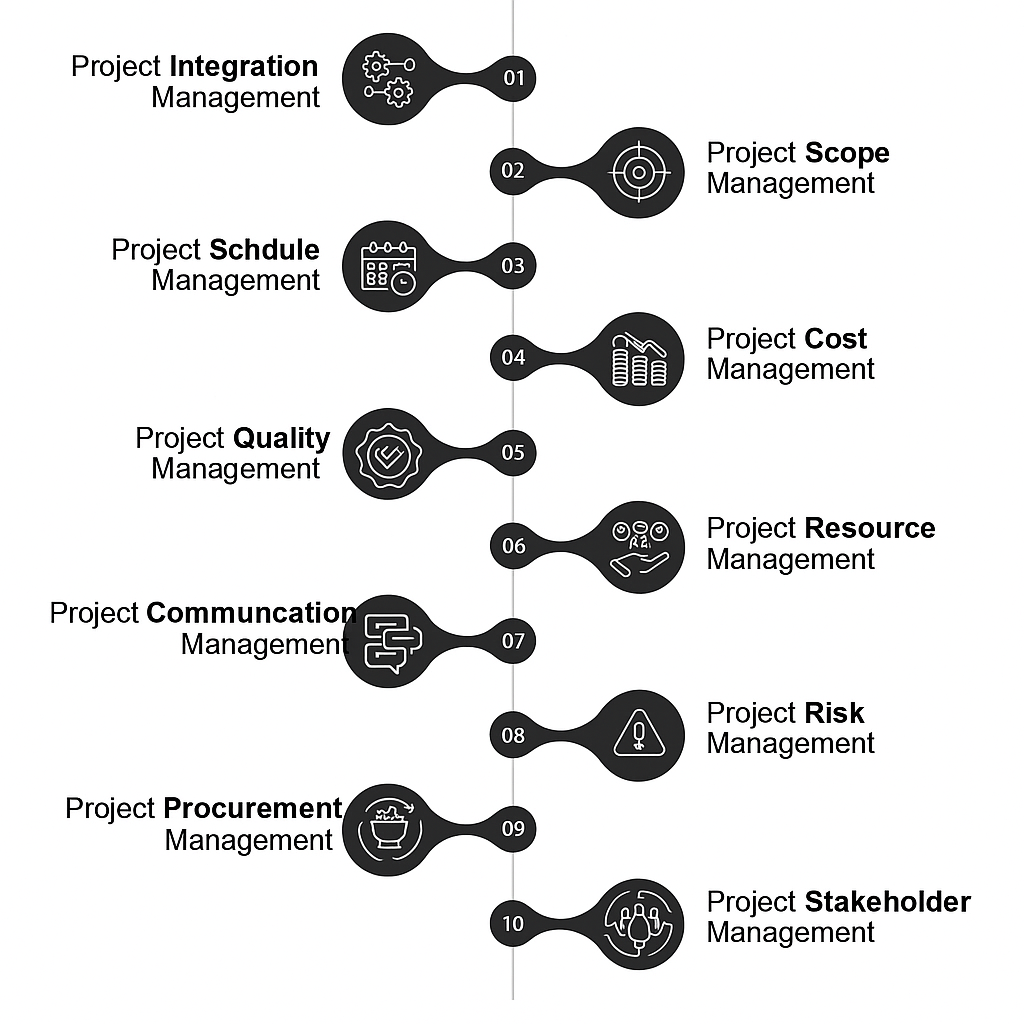
A few days ago, I stumbled upon PMBOK guide (again) when preparing some presentation, which showcasing the 10 knowledge areas of project management. There are two things in my mind when I looked at them: first, these 10 knowledge areas represent what project managers do on a daily basis to keep their projects running smoothly; and second, how to explain them to people who are not familiar with project management.

Well, not long after that, I had an interesting discussion with my friend’s 4-year-old son, who asked me about the construction staging of the Jeddah Tower (soon to be the tallest skyscraper in the world). It’s really interesting how kids these days are so knowledgeable and curious. After our chat, while checking my presentation in the car, my mind went back to the PMBOK Knowledge Areas. I wondered: how can we explain this to people in a way that’s easy to understand? Then I thought of my niece and nephew. We’re all huge LEGO fans and often build simple LEGO sets together. I suddenly realized that we can think of a project like building a LEGO set, and apply the 10 PMBOK Knowledge Areas to complete it. There are 10 knowledge areas in PMBOK: Integration Management, Scope Management, Schedule Management, Cost Management, Quality Management, Resource Management, Communication Management, Risk management, Procurement Management, and Stakeholder Management.

Project Management 10 Knowledge Areas (PMBOK)

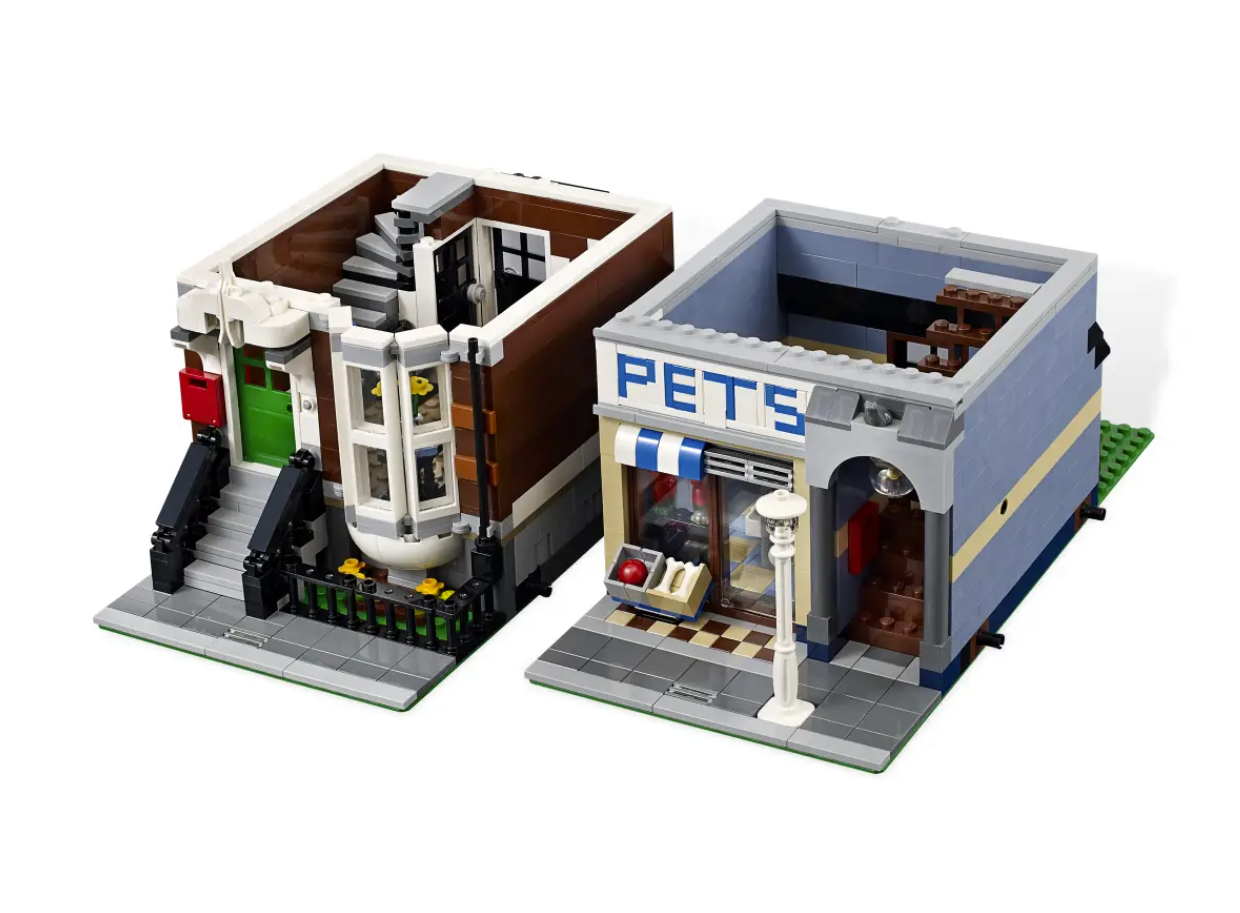
1. Integration Management is the master plan, for example if we want to build this LEGO Pet Shop set we need to make sure we finish the whole set as required. Integration management is about making sure we achieve our project goals, everything must work as on one big plan from scope, schedule, cost, quality, risk, team and even if there are any changes.

LEGO Pet Shop Set (credit: lego.com)

2. Scope Management is about making sure that the set is built exactly as required, not less and nothing extra. It is about the art of defining and controlling the scope of works. For example for this set, there will be two buildings in the set: the pet shop (the blue one) and the house (brown one). scope Management is making sure we delivered the right number of buildings and right number of bricks as well. In LEGO set usually there is the number of bricks at the end of the manual book, in real project we have the bill of quantity.

Two Building in The Set (credit: lego.com)

3. Schedule Management is about making plan and milestone of the project. This is one of my favorite part in the project management. Before working with BIM, I work with scheduling a lot. Schedule management is simply about managing which part that need to be finished first, some works can be finished independently, some need predecessor. For example, we want to finish the house first before the pet shop, so we’re setting a milestone. In building the house, there are 3 level, we need to finish the 1st floor before the 2nd floor and roof floor. The 1st floor is predecessor for the 2nd floor that we need to finish first. The main goal of schedule management is making sure that we deliver the project on time.

The 1st Level of Each Building (credit: lego.com)

4. Cost Management is where we make sure that the project stays within the budget from the beginning until finish . It is about planning how much money (or bricks in term of LEGO) the project is required to finish. Usually at the beginning, it means estimating total cost and budget. During the construction it means controlling and tracking our spending so we don’t run out of money (or bricks).

5. Quality Management is about making sure the project (or the LEGO set) built well and meet the agreed standards. We need to make sure not only the looks or finishing, but also the structure is strong and reliable. During the construction for example, we need to check if the pieces click correctly and is not falling apart. In a real project usually we have this kind of quality target for each work that we need to achieve, usually it is defined at the beginning and later during the project delivery we need to monitor our work to achieve the target.

6. Resource Management is about having the right people, tools and number of bricks to finish the project. For example if I work with my niece and nephew, me as the project manager will decide who builds which part. Also we need to make sure that we have enough bricks to build the set. The whole point of resources management is keeping everyone working smoothly while making sure no one runs out the bricks they need.

7. Communication Management is about making sure everyone understand how the finished set should look, which means everyone know what’s done and what’s next. It also means clear instruction for all stakeholder and avoiding confusion so no one builds the wrong part.

8. Risk Management means thinking ahead about what could go wrong with the project, it’s like losing LEGO bricks or the building collapse. Risk management is about making a plan how to avoid or mitigate these potential problem (also how to fix them quickly it happens) so the project stays on track.

9. Procurement Management is simply about getting anything what the project needs from the suppliers and making sure it arrives on time within the budget. It means getting the right LEGO set from the store or online.

LEGO Bricks (credit: lego.com)

10. Stakeholder Management is about understanding who cares about our LEGO project and their expectation. What we need to do is keeping them happy and informed during the project delivery.

In the end, building a LEGO set with my niece and nephew felt just like running a project. And if we look closer, each of the 10 PMBOK knowledge areas showed up too. Because we decided what to build, followed the steps (from the manual), stayed on budget (number of bricks), mitigated risks (like missing pieces or a building collapse), and kept everyone excited from start to finish. Using this LEGO example makes the 10 PMBOK knowledge areas and project management as a whole quite easy to understand.

Travelling Through Bridges

If I could travel back and ask my senior high school self whether I would choose civil engineering again, the answer would still be a solid yes. No doubt about it.

Back in high school, we once had an assignment to develop a simple website. I named mine Constructio which means construction in Latin. Sadly the free domain for the website is gone now, so I can’t open it anymore. On that little website, I wrote a few short articles about skyscrapers and bridges. One of them was about Tower Bridge. Little did I know, it would become a tiny hint of the path I was about to take years later.

Fast forward to today, as a civil engineer, I’ve developed a unique habit whenever I travel: I always look for bridges. For me, bridges are not just structures; they are pieces of engineering and art combined. When I look at them, not only admiring their structure complexity and beauty, I also think about the history behind it. Lately, capturing bridges through my lens has become one of my favorite parts of traveling.

Here are some of my favorite bridges I’ve captured so far, arranged from the oldest to the most recent to show how bridge has evolved over time

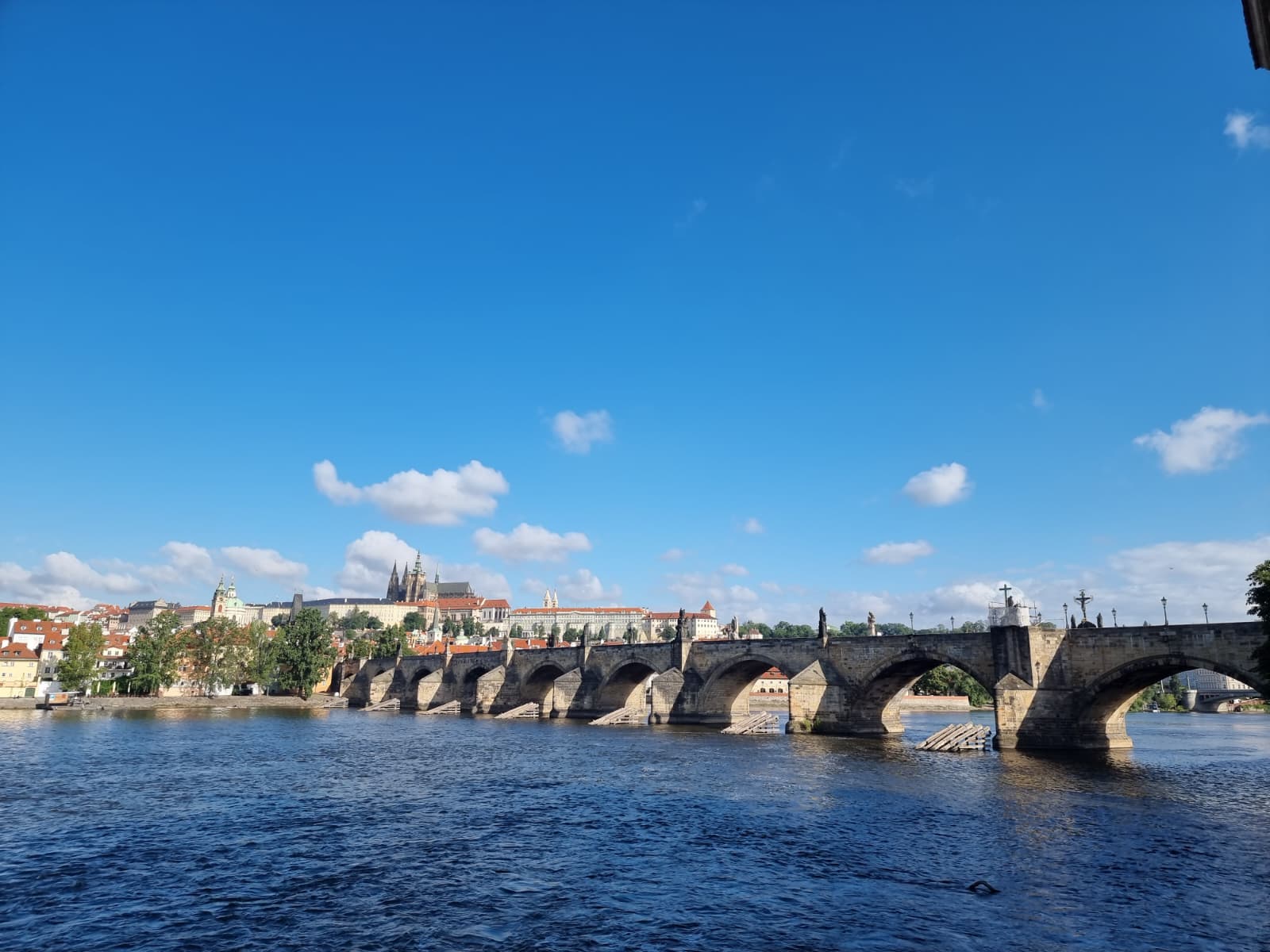
Charles Bridge (Karluv most), Prague, Czech Republic. Completed in 1357, this is the oldest bridge I’ve ever visited so far. A timeless stone arch bridge, and definitely one of my all-time favorites. Walking across it feels like stepping into a medieval era. I visited the bridge during a summer break and spent hours both crossing it and admiring it from afar. Influenced by Gothic architecture and it is considered as one of masterpieces of medieval engineering

Charles Bridge, Prague

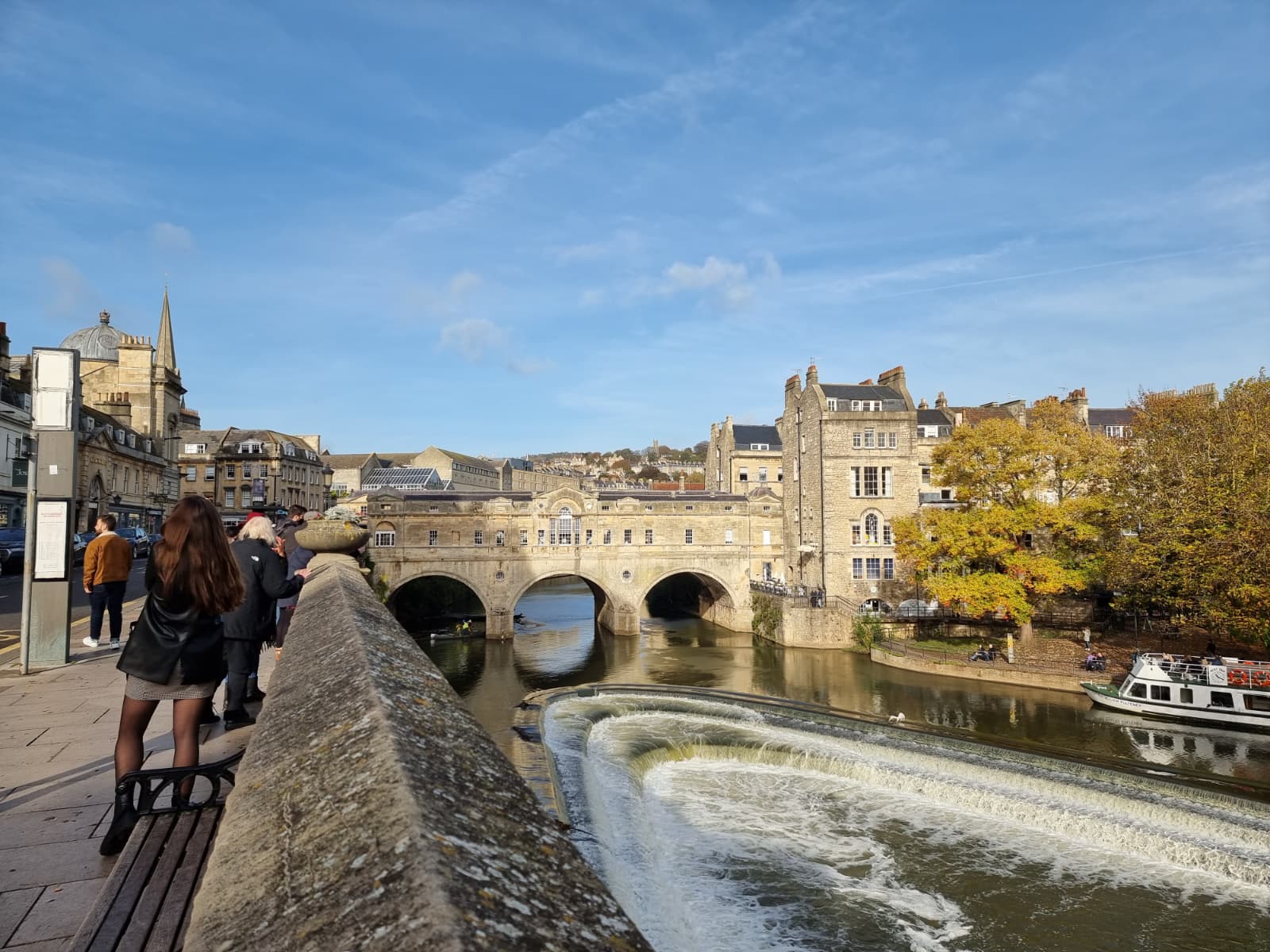
Pulteney Bridge, Bath, UK. I visited this bridge in autumn, and Bath during that season is definitely my favorite. I really recommend to visit this city during autumn. Pulteney Bridge is a stone arch bridge over the River Avon in Bath. Built in 1769, this bridge is really beautiful with row of shops which built along the deck.

Pulteney Bridge, Bath

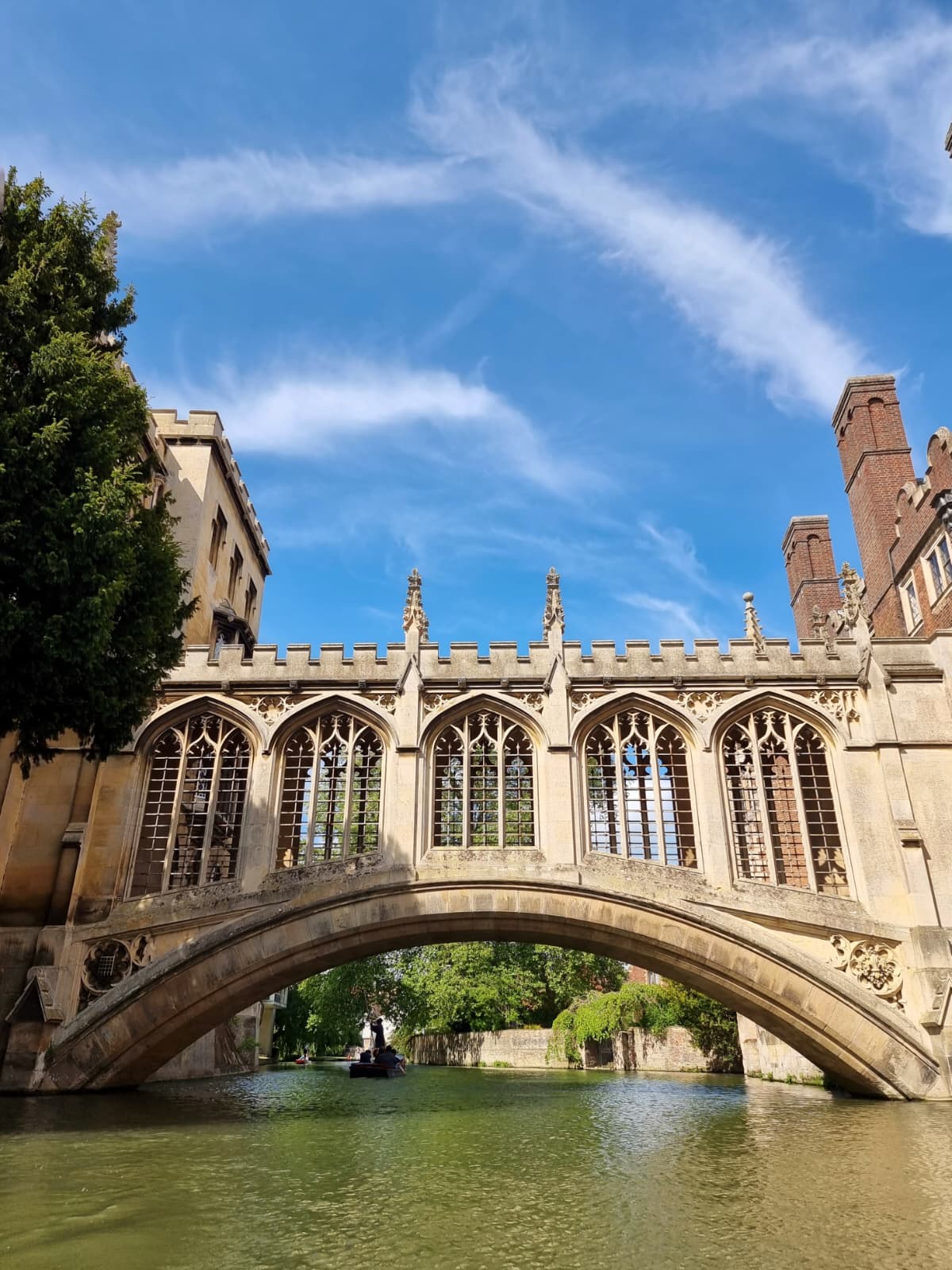
Bridge of Sighs, Cambridge, UK.  A beautiful pedestrian bridge at St John’s College, Cambridge. It’s named bridge of sighs because of its resemblance to the Venetian bridge of sighs in Venice, Italy. This Gothic style bridge which finished in 1831, is spanning over the River Cam. Its beauty is best admired while punting along the River Cam.

Bridge of Sighs, Cambridge

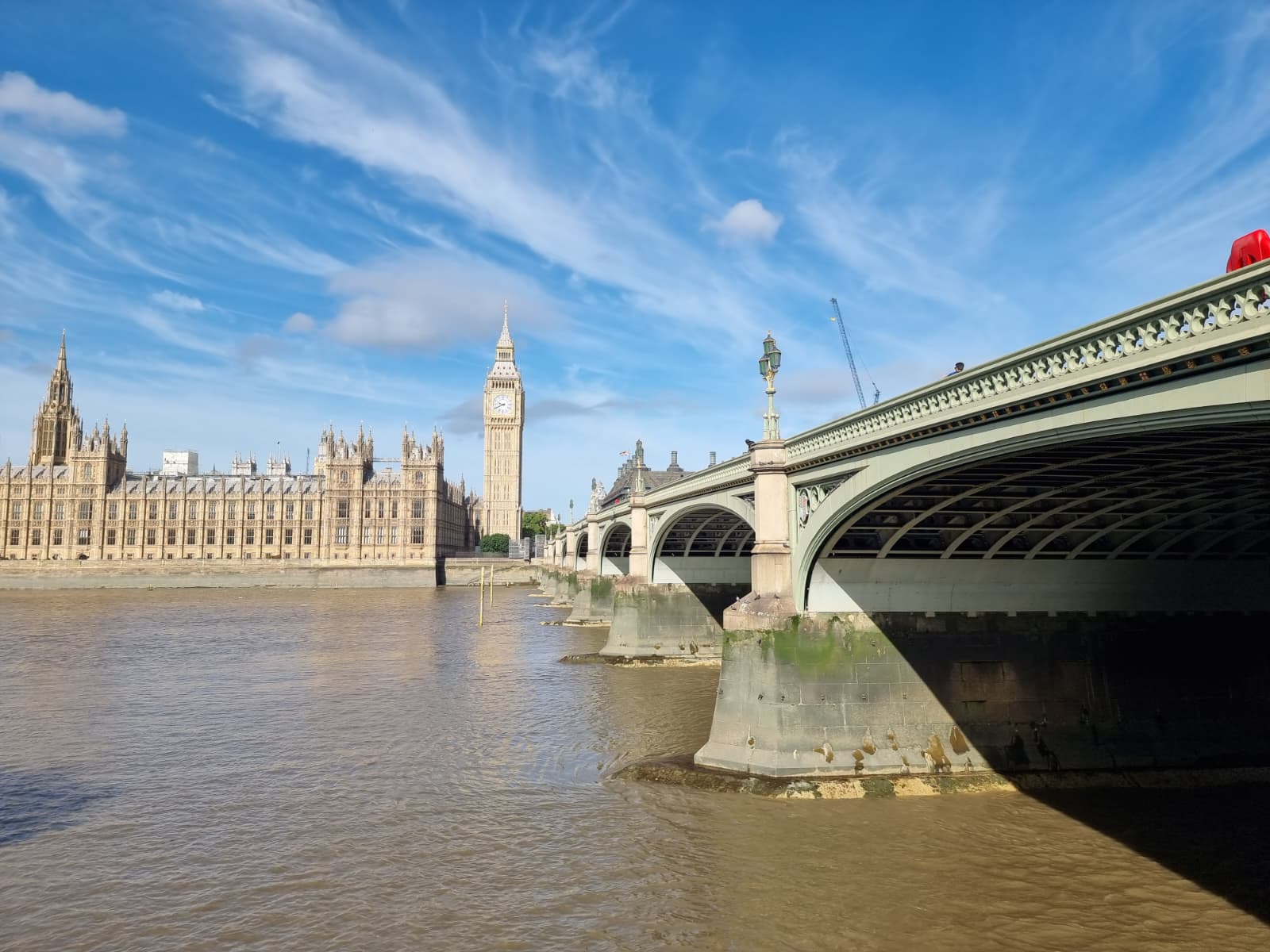
Westminster Bridge, London, UK. The current bridge is a cast iron arch bridge, standing proudly next to Big Ben and the Houses of Parliament. It offers one of the best views of London’s landmarks. Even Monet and Canaletto capture the beauty of the bridge through their painting. Actually, the first bridge, which is a stone arch bridge, is built around 1750. However, the bridge is subsiding badly and rebuilt in 1862 as a cast iron arch bridge.

Westminster Bridge, London

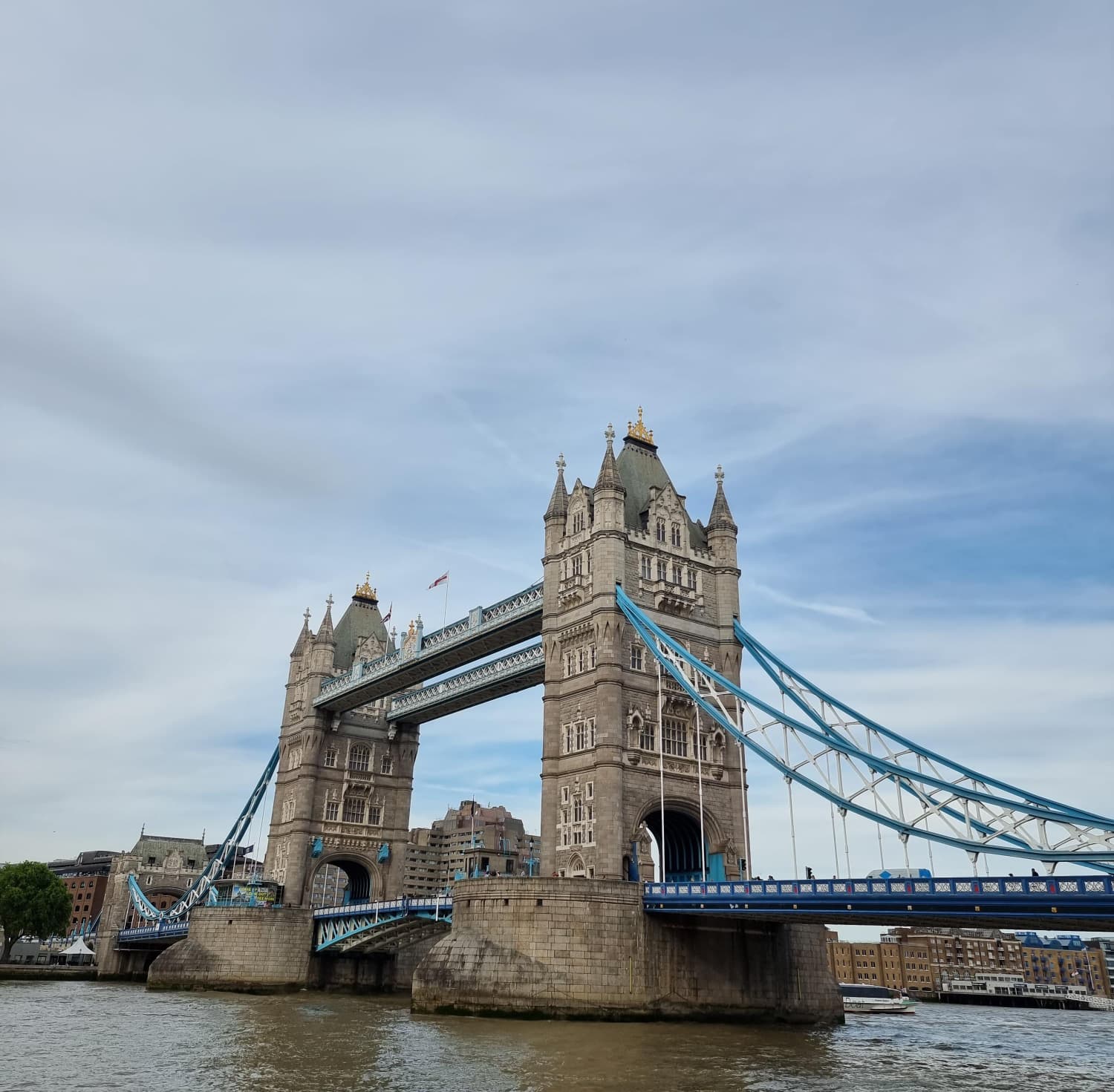
Tower Bridge, London, UK. Well, it is definitely my most favorite bridge in the world. Long before I studied in London, I had already written about it in that high school assignment. Years later, the first place I went to when I arrived in London was, of course, Tower Bridge. Completed in 1894, the Tower Bridge is a combination of suspension and bascule bridge. When visiting London, you should look for its lift time, so you can see how wonderful this bridge when lifting its deck.

Tower Bridge, London

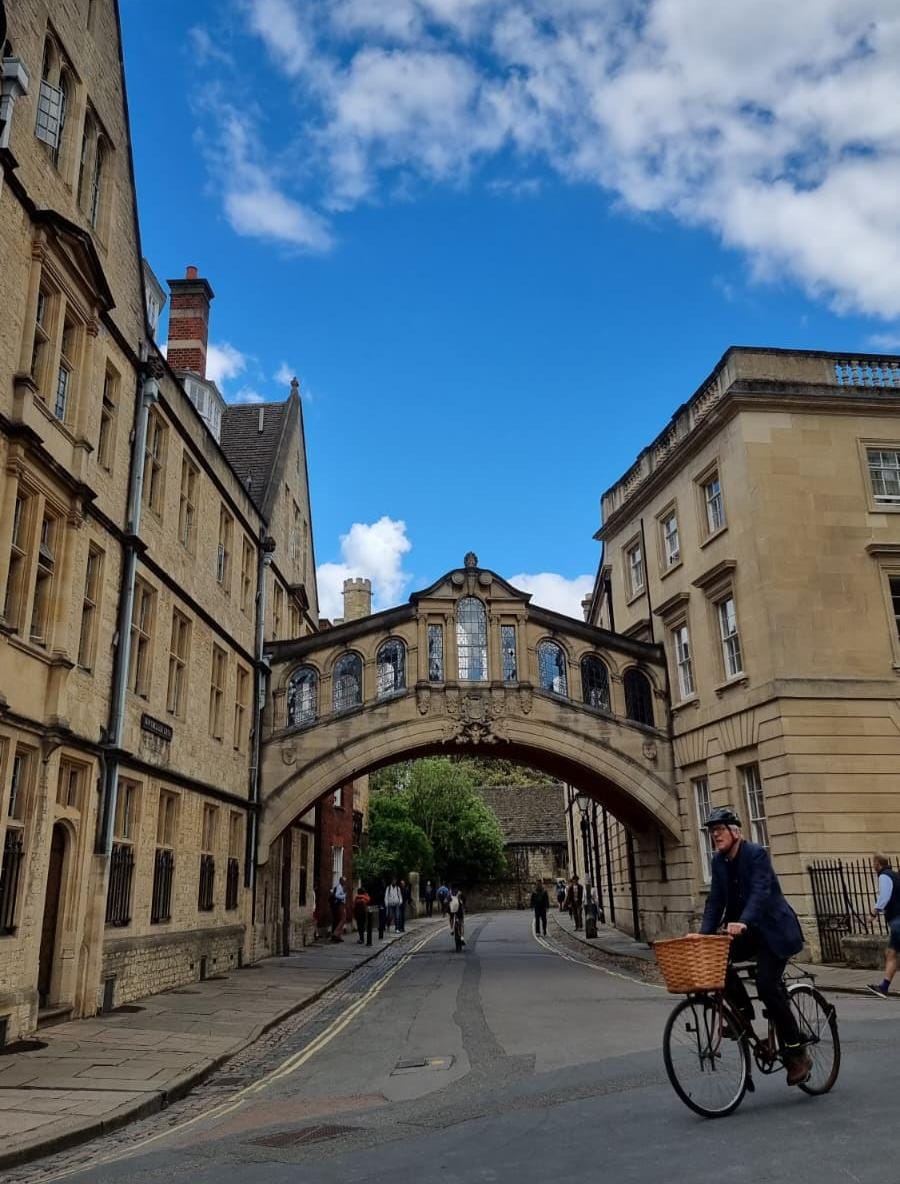
Bridge of Sighs, Oxford, UK. Quite similar in concept to Cambridge’s, but instead of crossing a river, this one crosses a road connecting two parts of Hertford College in Oxford. Finished in 1914, with its beautiful architecture, besides Radcliffe Camera, this bridge is one of the popular photo spots in Oxford as well.

Bridge of Sighs, Oxford

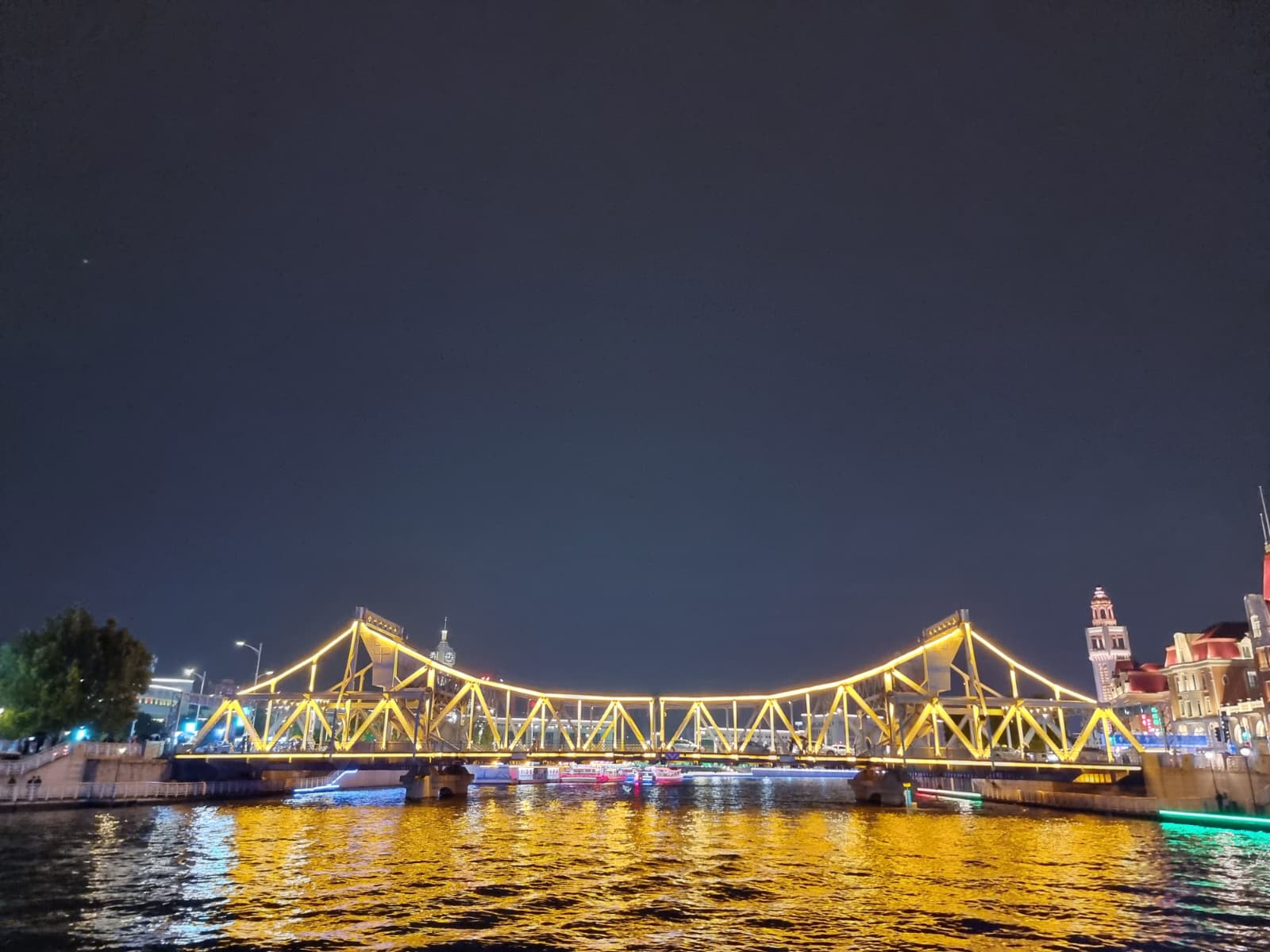
Jiefang Bridge, Tianjin, China. I saw this steel truss bascule bridge during a river cruise in Tianjin. A blend of steel truss structure and bascule system. I saw it during night and the lights are just so fascinating highlighting the complexity of its structure. This bridge is finished in 1927.

Jiefang Bridge, Tianjin

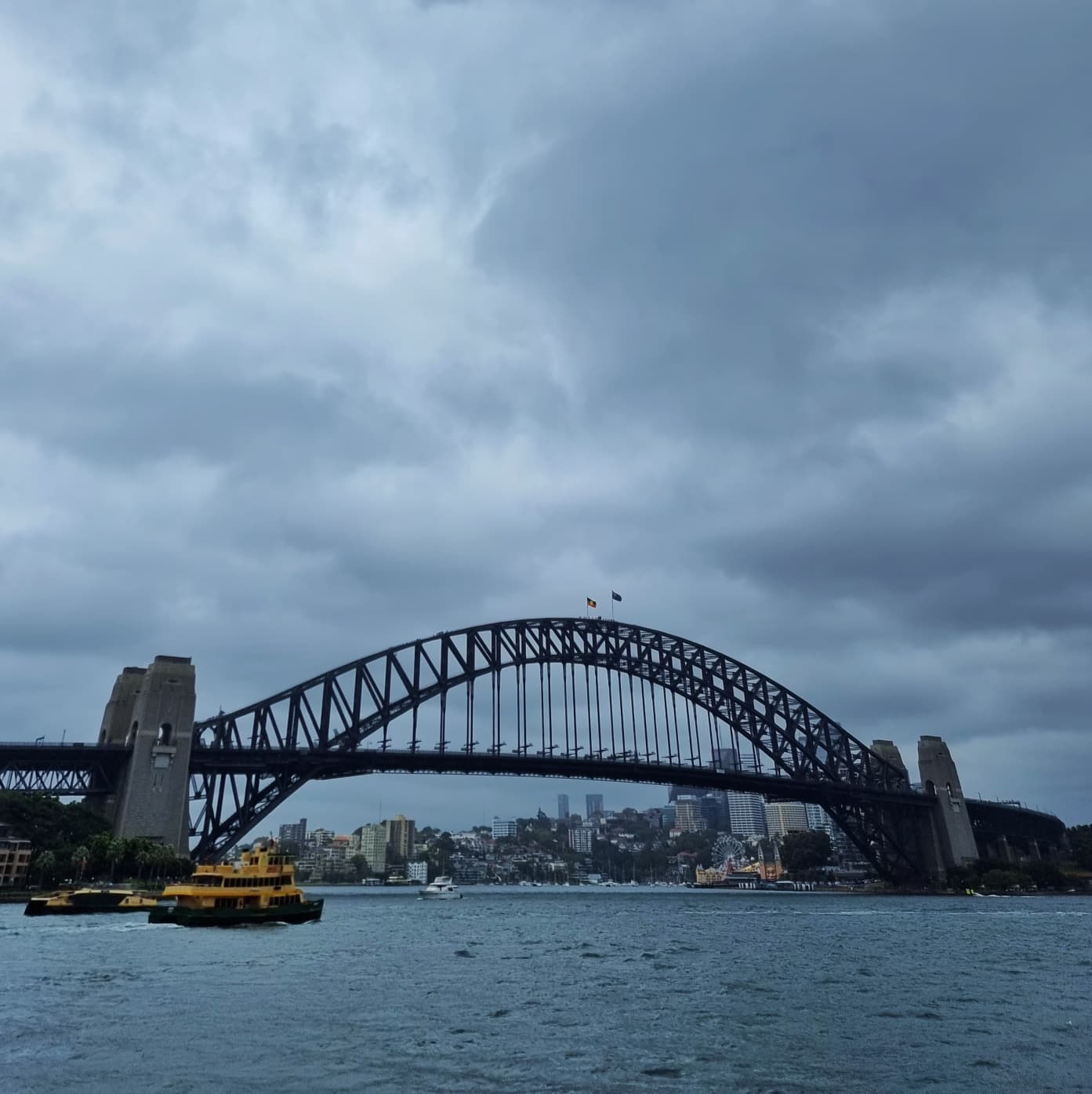
Harbour Bridge, Sydney, Australia. A massive steel arch bridge which built in 1932, famously known as the widest long-span bridge in the world. I really like it when passing this bridge and see the steel structure above me. You can enjoy the view of this bridge close and afar, especially from the sydney opera house area.

Harbour Bridge, Sydney

Story Bridge, Brisbane, Australia. A steel cantilever truss bridge finished in 1940. I was in awe when I saw the details of its truss structure up close. Visiting it at night was really worth it, I even try to capture the beauty if it through my painting.

Story Bridge, Brisbane

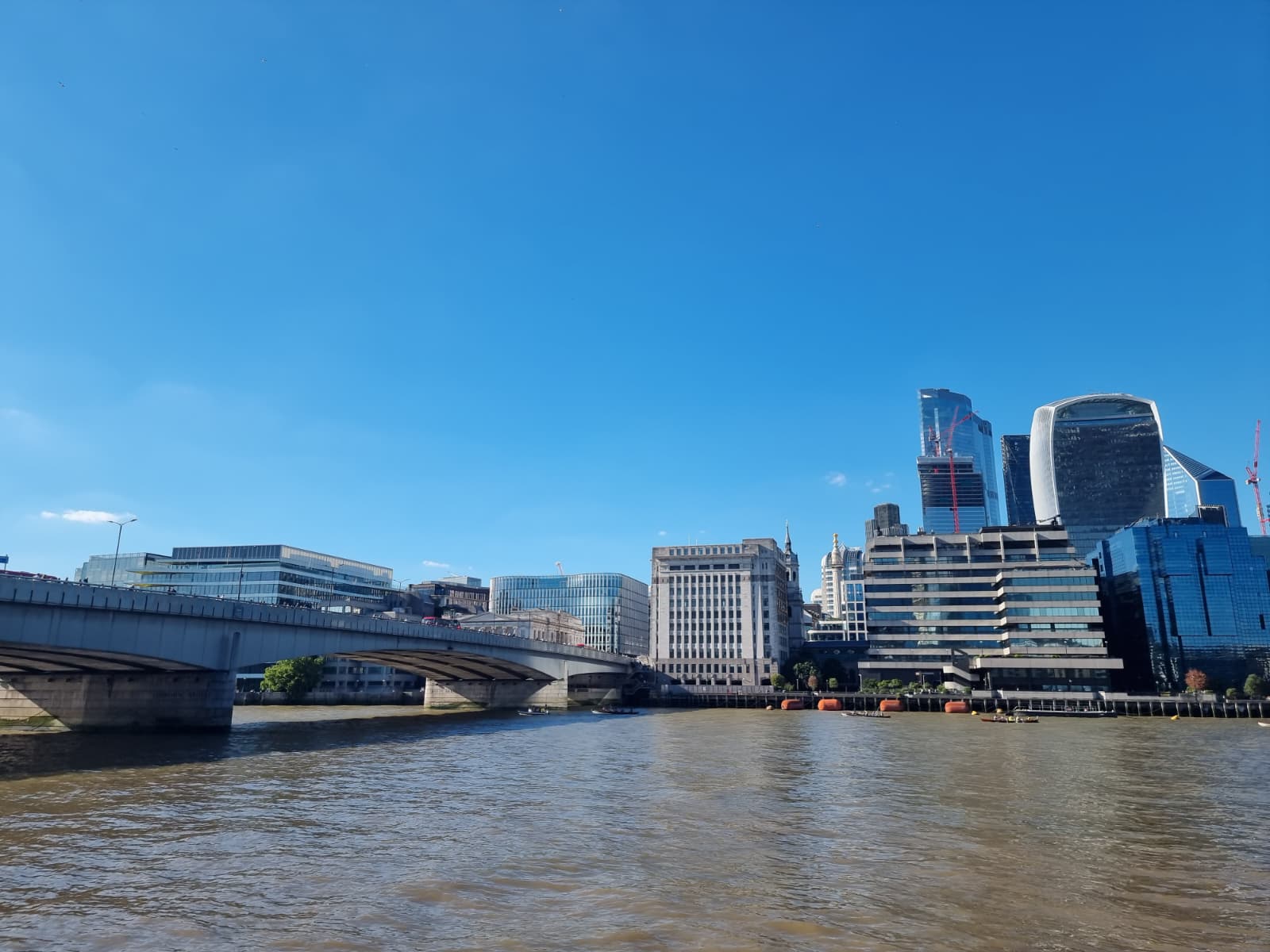
London Bridge, London, UK. I think most of us already familiar with the name, because of our childhood song. However, the current bridge which finished in 1973 is a prestressed concrete structure, simple yet play significant role for the traffic.

London Bridge, London

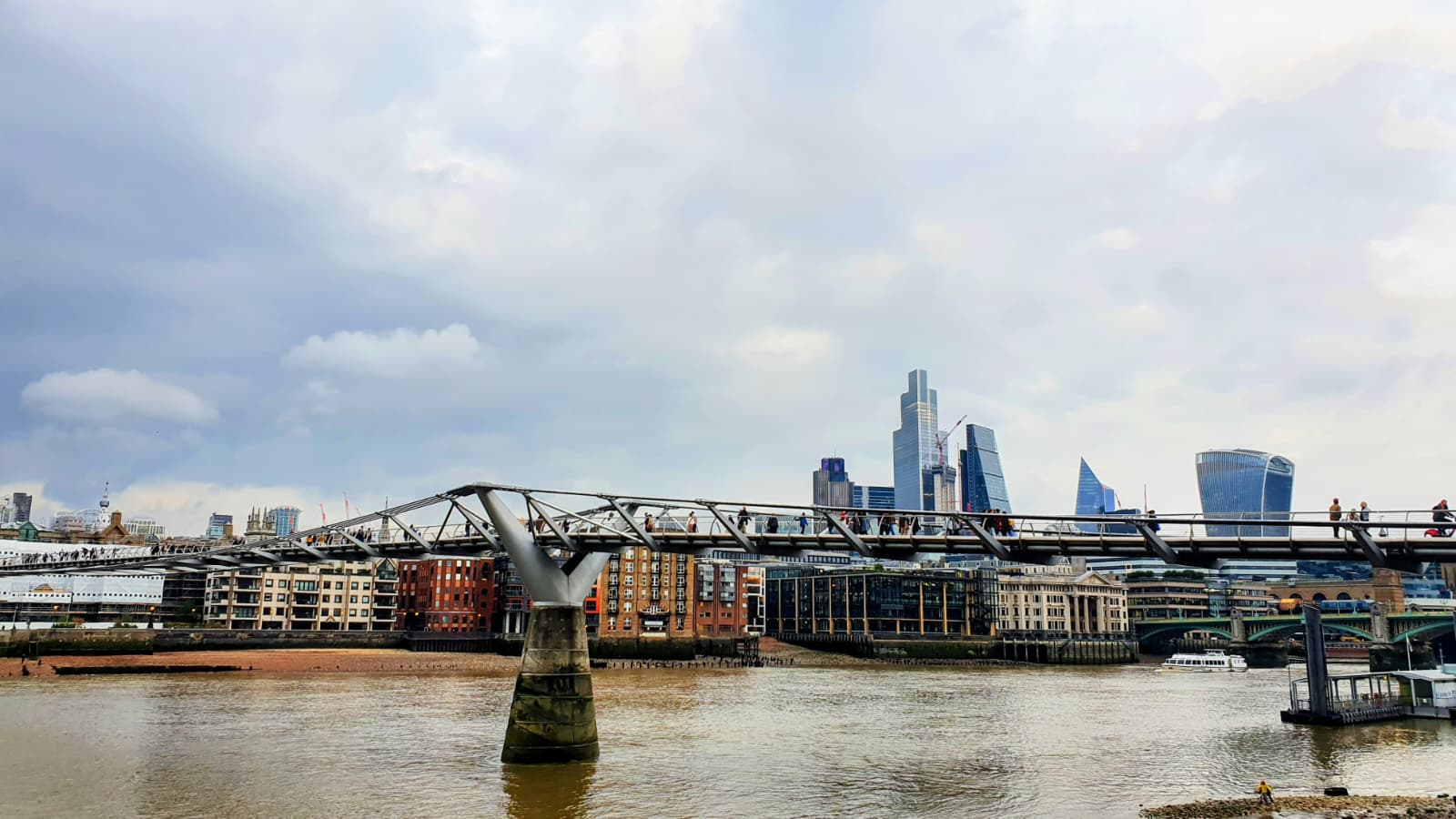
Millennium Bridge, London, UK. A sleek steel suspension pedestrian bridge that leads you straight to Tate Modern. I like the modern design of it, but it’s said when the bridge just finished in 2000, it is quite wobbly.

Millenium Bridge, London

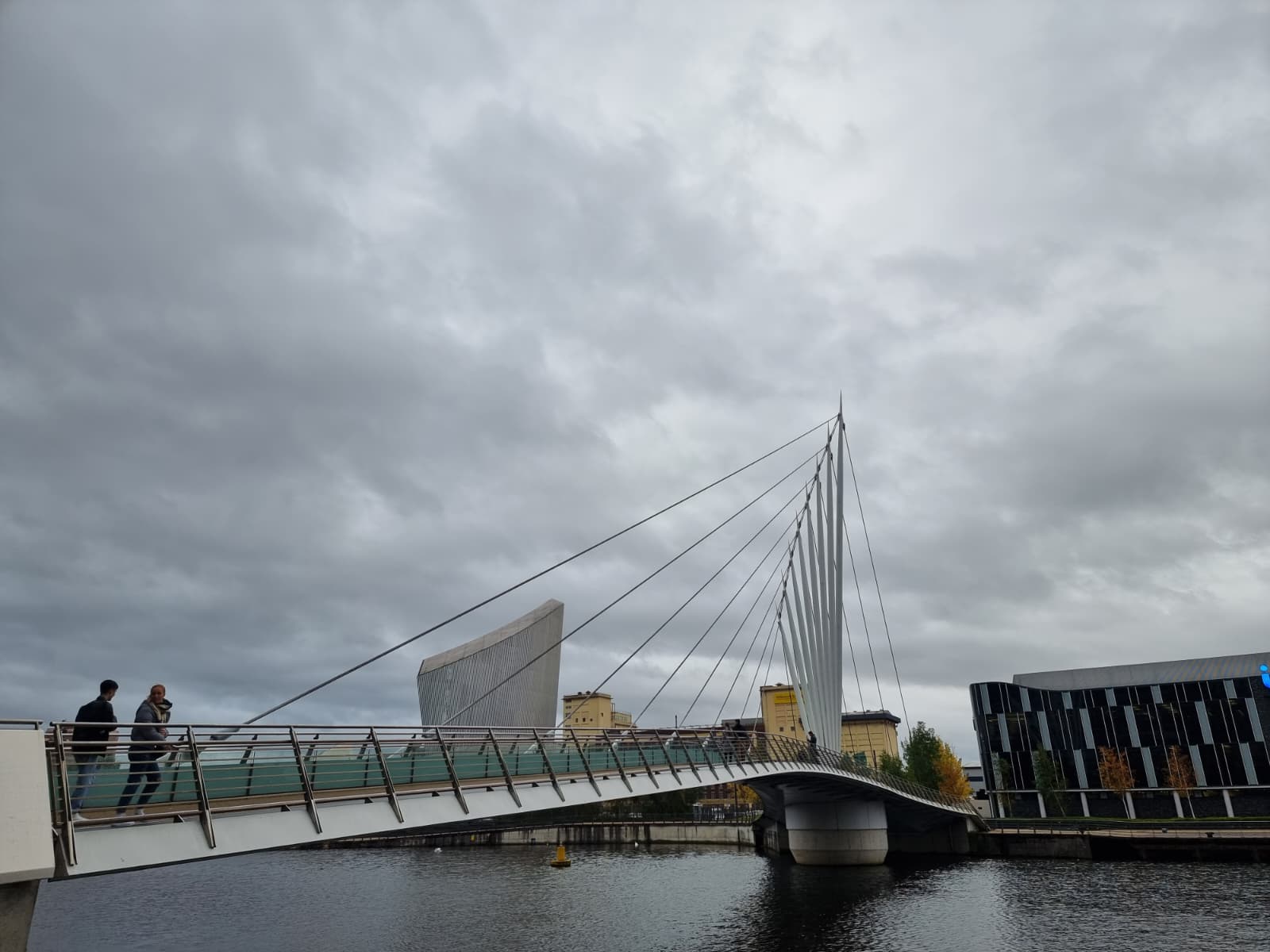
MediaCityUK Footbridge, Salford, UK. A modern cable-stayed pedestrian bridge built in 2011 with a striking design. the bridge has asymmetric twisted deck, where a boat can pass through it.

Media City Footbridge, Salford

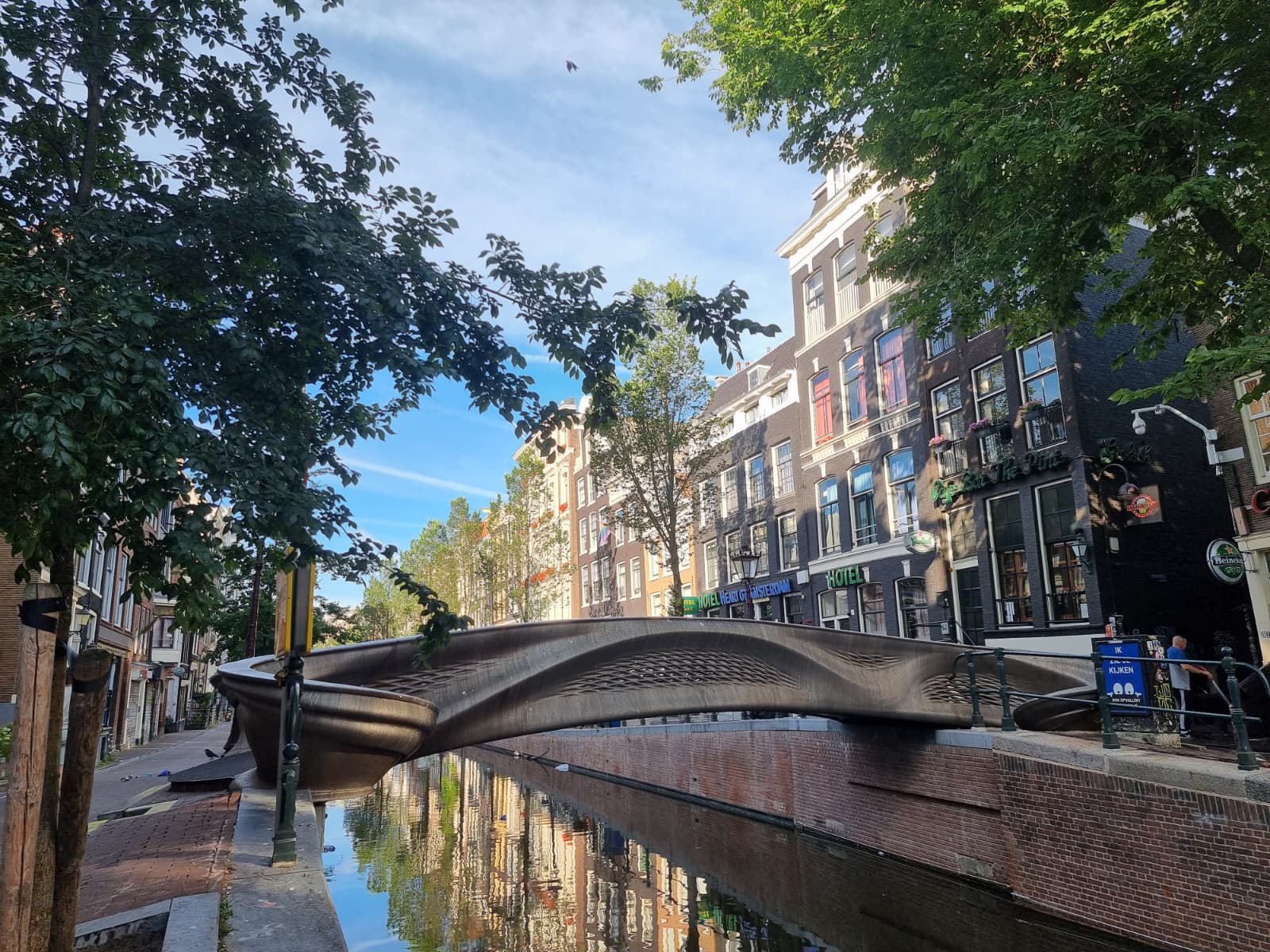
3D-Printed Bridge, Amsterdam, Netherlands. This bridge is second on my list after Van Gogh museum when I visited Amsterdam. What makes this bridge interesting is because it’s the world’s first fully 3D-printed steel bridge. This 3D-printed steel bridge is completed in 2021. As a civil engineer which passionate with digital technology this bridge show a glimpse into the future of construction technology.

3D Printed Bridge, Amsterdam

Every bridge I’ve visited tells a different story. Some are centuries old, while others are relatively new. Some are carrying rich history and some are showcasing the latest technology. But all of them remind me that a bridge is more than just a structure, it is a fusion of engineering and art. Above that, bridges feel like pathway of civilization which connecting people and places that help communities grow.

What a Cup of Coffee Taught Me About Life

My coffee habit started when I was a teenager. Like most Indonesians, I used to enjoy my coffee sweet. While my mom and dad had their sweet kopi tubruk, I preferred mine with milk. Even through university life, I kept the same habit, savoring both the flavor and the caffeine effect. I think I really chased the caffeine dose back then, since it helped me cram for assignments. Like any typical engineering student, staying up late to finish projects was just part of my daily routine.

However, my coffee habit has also evolved with age. After graduated from the uni, I started enjoying coffee without sugar. Well, an espresso-based, mostly with milk. Most of my friends know I have just one go-to when it comes to espresso-based: a flat white. When I travel or have a day off, I love going coffee hopping, always ordering the classic flat white at different cafés. But after a few cups, it can feel a bit too heavy because of the milk. That’s why lately I prefer manual brews. Unlike espresso-based drinks, with manual brew I enjoy exploring single-origin beans and different brewing techniques

A Cup of Flat White in a Small Coffee Shop in Brighton, UK

I realized there are so many variables that can affect my favorite flat white: the beans, espresso extraction, milk, and the coffee-to-milk ratio. At first, I thought manual brew would be simpler, since it doesn’t involve milk as a variable. But I was completely wrong. Manual brew actually comes with even more variables: the beans, grind size, water (temperature and mineral content), coffee-to-water ratio, technique, and brewing time. What makes it special is the taste is never exactly the same and that’s the charm of it. It’s what keeps me coming back.

For me, coffee is not only about the taste and the caffeine kick, my coffee journey and its evolution have taught me lessons as well

Coffee has taught me to slow down and regain my balance in this fast-paced world. I believe that a good coffee is best enjoyed slowly. It allows me to savor the moment, and reflect. In a world that constantly demands speed and instant results, there’s something grounding about embracing slowness. Working in the construction field, an industry that is demanding and always prone to change, I find that a cup of coffee has become a constant in my life. It’s always be my anchor, a quiet ritual that hold me in the midst of transitions,chaos and uncertainties.

Coffee helps me embrace stillness, creating a calm and clear space for my thoughts. A cup of coffee makes me pause and temporarily disconnect from the noisy world, allowing me to focus only on what’s in front of me. I enjoy every sip of it, the flavor and the aroma. In that stillness, my mind free to wander, and that’s usually when inspiration finds its way in. I’ve spent countless hours in coffee shops, whether working on my dissertation or trying to untangle and organize my thoughts. Even on this blog, most of the writings were born in coffee shops.

Coffee has also taught me to always respect the process, that good things take time. In each coffee house, we often find beans that have traveled from faraway regions, whether local or from abroad. The journey of coffee beans is a long one. From the farmers who nurture them, to the master roasters who carefully discover specific flavors, to the baristas who craft each cup with care. By the time it reaches us, every sip carries the story of many people’s dedication. It reminds me that every part of the process, no matter how small, plays a significant role.

In the end, coffee is more than just a drink for me. It is a reminder to slow down, to embrace stillness, and to respect the process. Every cup carries not only flavor and aroma but also lessons of patience, gratitude, and the dedication behind the journey.

Embracing the Beginner’s Mind

About a week ago, I joined a workshop session where I encountered a part that really really struck me, one single sentence that still lingers in my mind about how we should embrace the beginner’s mind. Exactly on that time, I was in the middle of a change, stepping into a field I had never truly understood before. What I did know was that we should always be lifelong learners, that life is a continuous journey of learning. From a baby learning to crawl, to a teenager trying to find their place in the world, and even when we begin to contemplate our purpose.

Looking back, there were several times I was in a position where I was pushed to learn new skills. Graduated as a civil engineer with a geotechnical engineering focus, I start my career as an engineer where I work with geotechnical works. Only a few months later, I was assigned to another project where I was involved in project management tasks like scheduling and quantity surveying. Not long after, I was assigned to work with BIM, something completely new to me at the time. I learned from scratch, and that was when I discovered my passion for digital construction. I knew this was the future of the construction industry. I even pursued a master’s degree in Digital Engineering Management. After completing my studies in 2022, I continued my career in that field and had found my comfort zone. Then suddenly, I was asked to change fields once again. Like most of sudden changes, the transition brought discomfort, but it also reminded me that we must embrace it.

Back to the concept of the beginner’s mind, although I have always believed in continuous learning, I had never heard of this beginner’s mind concept before. But when I heard it in the workshop that day, I knew it was the missing piece to complement my belief in lifelong learning. The concept, introduced by Zen master Shunryu Suzuki. He said, “In the beginner’s mind there are many possibilities, but in the expert’s there are few.”

I think this approach helps us stay humble. It reminds us that it’s okay not to have everything figured out. It encourages us to approach something new with fresh eyes, free from the weight of prior assumptions. It reminds me of how children, like my niece and nephew, are naturally good at this. They get excited about so many things, ask endless questions, and got curious in the simplest moments. That boundless curiosity, constantly asking “why” and “how”, fuels a willingness to learn. With this approach, the joy of learning something new helps us trust the process without heavy expectations and without fear of the result.

A Vase of Peonies (2025), Pastel on Paper

Just few months ago, I started painting again with my favorite childhood medium, just as I once did, with pure joy, free from rules, fear of mistakes, or pressure to make something “good.” I just realized now that this was the essence of the beginner’s mind. One thing I will keep in mind is that we should always see ourselves as a work in progress, a continuous learner, a lifelong student of life. So, always approach with beginner’s mind.

Fifteen Years, Five Phases, One Speech That Stayed

If there’s one video I’d recommend everyone to watch, it’s Steve Jobs’ commencement speech at Stanford University in 2005

I’ve watched it at different points in my life: during high school, university, the early days of my career, while pursuing my Master’s degree, and now, again, in the midst of change. Each time, a different part resonates with me.

Seventeen years since it was first posted, I still find myself returning to it, revisiting old memories and reminding myself why I started.

A Thought by the Shore

I first watched it in 2010, back when I was a high school student in Bogor, in my teenage phase, full of dreams, and determined to get into my dream university. One line spoke to me:
“Have the courage to follow your heart and intuition. They somehow already know what you truly want to become.”
That was the moment I decided to pursue a degree in civil engineering, driven by my fascination with buildings and bridges, my love for Lego, and interest in physics.


In 2014, I watched it again during my final year at university in Bandung, struggling to complete my thesis. Another line stayed with me:
“The only way to do great work is to love what you do. If you haven’t found it yet, keep looking. Don’t settle.”
It reminded me to hold onto the joy in what I was doing, even during the most stressful and challenging moments.

Then came 2020. The world was hit by COVID, and I had already spent a few years working in the construction industry. At that time, this part hit me hard:
“Your time is limited, so don’t waste it living someone else’s life.”
It pushed me to chase one of my lifelong dreams, to study abroad and see the world from a different perspective.

In 2022, I was in London, once again a student, this time working on my Master’s dissertation. I watched the speech again.
This time, a different line resonated deeply:
“You can’t connect the dots looking forward; you can only connect them looking backward.”
A simple but powerful reminder to pause and reflect on my journey.

Now in 2025, in the midst of yet another transition, I revisit it once more. It’s still one of the most powerful speeches I’ve ever heard. And this line now speaks to me the most:
“Stay hungry. Stay foolish.”
A reminder to keep learning, embrace change, and hold onto the beginner’s mindset, no matter how far you’ve come.

Maybe one day, in the future, I’ll find myself watching this speech again, during another turning point, another leap of faith, another chapter of growth. It has quietly accompanied me through every phase of my journey so far, like an old friend offering timeless wisdom, reminding me to trust the process, to stay curious, and to keep moving forward.
However, above all those lines, these verses from the Qur’an remain the most grounding and powerful reminder for me:

“So when you have finished [your duties], then stand up [for worship]. And to your Lord direct [your] longing.”
— Surah Al-Insyirah (94:7–8)

A gentle yet profound message: to stay anchored in faith and keep going.